This is a description of a typical(ish) day at HVC
Commuting: Mornings start a bit earlier than back home as there are only 12 hours of daylight and light outside those time is unreliable, getting up early is the best defense against the vagaries of NEPA. After a quick and refreshingly cold bucket based “shower” its time to head out and try and find an okada (motor bike taxi) for the first stage of the journey.
If pouring a bucket of cold
 water over your head doesn’t wake me up, the morning bike ride does, after a quick negotiation is off down to the main road. The cost should be N40 (16p) but they always try for at least 50 despite this never having worked in the past. Negotiating is part of any okada journey, think the “he doesn’t want to haggle” bit in life of Brian. The ride is 1.5 miles and takes just under 10 mins.
After getting off the okada at the main road its onto the public busses, again a brief bit of negotiation is in order, but as I’m going out of town against the flow the bus is normally empty which makes this bit pretty easy and they agree to 40N without any complaints. The bus goes the 8 miles to sabo and takes 20 mins.
After the public bus I get onto the staff bus which goes from the very south of kaduna (a suburb called Sabo) to HVC. The bus ride is 10 miles takes 25mins and the staff use this time to gossip and attempt to teach me Hausa, which I have only really mastered the greetings and essential phrases. On the way we go past the exciting sights of Kaduna Refinary and the New road (so new they rebuild it every year and never seem manage to finish it)

 Work:
Work:We arrive at HVC’s offices just before 8, it takes a while to get to my desk as it is important to greet everyone who’s arrived already and ask how their night was. The offices are formed of a clinic building, a meeting hall and a series of office rooms big enough for 2 desks arranged around a central courtyard.
There is just enough time to make a cup of tea before the real work begins, I am helping run the Financial management committee which has the task of sorting out financial processes and identifying new revenue streams and reducing spending. The committee is having its first meeting and top of the agenda is the loss of a major donor. Where I help out is in the preparation of some tables and charts of all the accounts, expenditure and income so its easy to see what’s going where. The idea behind volunteering is that where possible we should not be making the decisions but helping permanent staff to make them. In this case its true up to a point, but I do tend to help things along a little in the direction that I like best. Somehow this all goes horribly wrong and the meeting ends with me responsible for all the action points.
 After the meeting is over the man who is going to build the solar dryers has arrived so its time to take him through all the little improvements which need to be made to the current prototype before they go into full production. As he speaks only a little English and my hausa doesn’t extend past greetings it takes a little translation from a colleague to communicate the changes I want made. At the end I hope he understands and hopefully this will be the last “prototype”.
This take the time up to about noon when I have a chance to have some lunch of whatever I cooked the night before. After the break its time to type up some minutes of the meeting once finished I chat to some of the other staff to find out what there up to before catching a lift most of the way home.
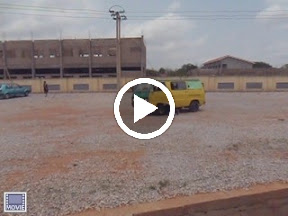
Normally I am home by half three, but today we stop at the bank. Whilst Ruth is in the bank a bus full of school kids breaks down behind us and the driver tries in vein to push start it. After videoing his attempts I give them a hand and to much to the amusement of all involved the crazy white man pushes their bus and we get it to start. This is the first exercise I have done in ages and my sweating and panting only add to their amusement.
Cooking:
Cooking takes up large part of the day because everything has to be prepared from scratch. Most volunteers eat very little meat due to the trauma of the purchasing process. A Nigerian butcher is basically just a table by the side of the road, no refrigeration and no attempt to even dissuade the flies turns most volunteers vegetarian very quickly. Luckily there is an expatty “frozen meat shop” the meat is normally frozen when I buy it and they seem to own a generator which fills me with some confidence that its spent most of its afterlife in such a state. This is normally consumed on the day of purchase, trying to keep frozen meat is the electricity equivalent of a rain (drought?) dance.
The heat also takes a lot of the fun out of cooking, the kitchen can get up to 40 if the hob and oven are on. Although the back door opens cooking around dusk means the mosquitoes normally make us shut it shortly afterwards. Despite all this we manage to have quite a good variety of meals, mainly ranging around the tomato and onion base with occasional meat and pasta/potatoes. I am looking forward to the ease of frozen pizza or a ready meal, this makes me a terrible person.
(food in general will be the subject of another blog post)
Evening:
After getting home there are a couple of hours before cooking which are normally filled by shopping for food, reading a book or if I’m feeling really energetic doing some exercise. Kaduna has an amazing set of sport facilities, all built around the old polo club for a local sporting games in 2009. In true Nigerian style no maintenance has been carried out since and in a couple of years the place will look like a soviet era ruin, but at the moment the weeds are still planning their attacks on the tarmac. Running around the horse racing track is the normal way to get some much needed exercise and occasionally (well once) I played tennis with another NGO’s tennis academy which proves just how bad at tennis I am. I’m hoping now its rainy season and there are new volunteers coming to Kaduna we will be able to play tennis more often.
After eating dinner NEPA will normally go off around 7, so most meals are by candle light which is very atmospheric but this is tempered by the sweating which goes with 35C and no fan.
After dinner its off out for a beer in one of the many bars conveniently located just up our road or a dvd. After which its time for bed and doing it all again the next day.
So that’s it, a day in the life. Hopefully this has explained a bit more of what my life is like at the moment.


